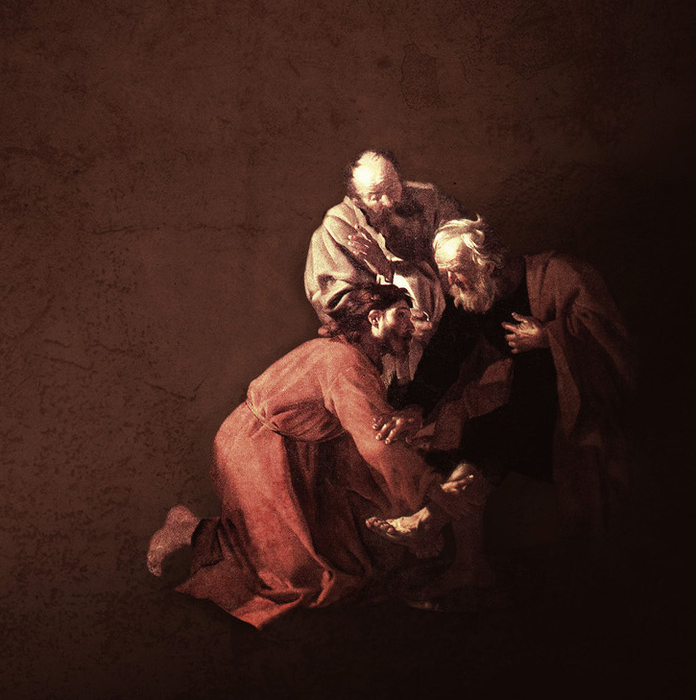
We’re continuing our study through 2 Timothy and Titus, examining these letters in conjunction because their themes overlap significantly. Titus was Paul’s “true son” and co-worker, a man with exceptional organizational skills who served Paul faithfully in many capacities. When Paul needed someone to organize the collection for the suffering church in Jerusalem, he sent Titus. Paul spoke of him in deeply endearing terms—as a source of comfort and encouragement.
The Context of Titus
When Paul wrote this letter, either just before or during his second imprisonment, Titus had been left on the island of Crete. This island, about 160 miles long and 35 miles wide in the Mediterranean, had once been a famous center of Greek culture. But by Titus’s time, it was in decline—the population had become greatly depraved and unmanageable.
Titus’s mission was clear: to appoint elders for the churches that had been planted there, which is why Paul includes qualifications for elders in this letter, just as he did in his letter to Timothy.
One author described this short 46-verse letter as “a beautiful duet, a sonnet of doctrine and deeds, of belief and behavior, of creed and conduct.” Being sound in doctrine and zealous for good works—these are the twin themes that tie this powerful epistle together.
The Beautiful Tension of Election and Faith
Let’s focus on Titus 1:1-2:
“Paul, a servant of God and an apostle of Jesus Christ, for the faith of God’s elect and their knowledge of the truth that leads to godliness in the hope of eternal life that God, who cannot lie, promised before time began.”
Notice the cascade of truth: Paul identifies himself as an apostle of Jesus Christ, a servant of God, for the faith of God’s elect.
Here we encounter a beautiful two-sided coin that appears often in Scripture. Are you saved because you chose to exercise faith in Jesus? Yes, you certainly made a free choice to put your faith in Jesus. But you only had that faith because of the gracious gift of God through the work of the Holy Spirit.
Remember Ephesians 2:4-9: “God, who is rich in mercy because of his great love that he had for us, made us alive with Christ, even though we were dead in trespasses… For you were saved by grace through faith. And this is not of yourselves. It is God’s gift, not from works, lest any man can boast.”
David Platt notes in his commentary: “His apostleship exists for the faith—here is human responsibility. For the faith of God’s elect—here is divine sovereignty.” Paul sees no dichotomy, no contradiction between God’s sovereignty and human responsibility.
Salvation from beginning to end is the sovereign work of God’s grace. Yet no one will be saved who does not repent and believe. And all who do repent and believe will be saved.
Spurgeon’s Wisdom
Charles Spurgeon once preached on Genesis, where God said, “Jacob I loved, and Esau I hated.” Speaking about God’s sovereign grace, he said, “He saves man by sovereign grace, and if men perish, they perish justly by their own fault.”
When asked how to reconcile these doctrines, Spurgeon replied: “My dear brethren, I never reconcile two friends. These two doctrines are friends with one another, for they are both in God’s word, and I shall not attempt to reconcile them.”
This is our approach as well. When the Bible talks about election, predestination, and God’s sovereign choice, we preach that with all our hearts. We find great comfort, encouragement, and hope in what God has sovereignly done. But at the same time, we proclaim the need of all people everywhere to repent and call upon the name of Christ. We will not let our fervor for evangelism be dampened by misunderstanding doctrine.
The Scriptures teach both truths. As Spurgeon wisely said, we don’t try to reconcile them—we preach what God’s Word says when it says it.
The Progression Toward Godliness
Look again at verses 1 and 2. There’s a progression: apostle of Jesus Christ for the faith—for the faith of God’s elect—to gain knowledge of the truth—knowledge of the truth that leads to godliness.
Truth doesn’t just sit there. Truth transforms. Truth changes lives.
Both Timothy and Titus focus on practical godliness in everyday life in very concrete, specific ways. There is no genuine work of the gospel that has no effect on our behavior.
Remember that old bumper sticker? “Christians aren’t perfect, just forgiven.” That statement is incomplete. Christians aren’t perfect—that’s true. We won’t be this side of heaven. But Christians are not just forgiven—they are observably changed by the saving gospel and the power of the Spirit.
Personal Testimony
If you had known me at 15, 16, or 17, you would never have imagined I would become a pastor. You wouldn’t have wanted that kid as your pastor—not just because he was young and immature, but because he was lost. I was a slave to Satan, a member of the kingdom of darkness, and my behavior showed it.
But one night, I got out of bed, knelt in my bedroom, and prayed: “God, I’ve messed up. I’ve screwed up. I have no hope. I have no purpose. I know I’m a sinner. I’m going to give my life to you. Would you be my Savior? I’ll do whatever you say from this point on.”
I got back in bed and went to sleep. No big tears, no drama. The next day, I was a different person.
So different that when I told my parents I had read “Children, obey your parents, for this is right,” and that I would obey them from then on, they looked at each other wondering what had happened. I had put them through hell, and they knew it.
When I got saved, I was changed. My behavior changed. I repented. Things dropped out of my life. I couldn’t engage in certain behaviors anymore. I adopted new behaviors.
Christians aren’t perfect—ask my wife! But we’re not just forgiven. We are forgiven, and our lives have been changed by the gospel of Jesus Christ.
The Evidence of True Conversion
In 1 Corinthians 6, Paul writes: “Do you not know that the unrighteous will not inherit the kingdom of God? Do not be deceived. Neither the sexually immoral, nor idolaters, nor adulterers, nor men who practice homosexuality, nor thieves, nor the greedy, nor drunkards, nor revilers, nor swindlers will inherit the kingdom of God. And such were some of you. But you were washed, you were sanctified, you were justified in the name of the Lord Jesus Christ and by the Spirit of God.”
Does this mean they were all living perfect lives? No. Just read Corinthians to see that’s not the case. But it does mean that at one point they had been captive to a rebellious lifestyle, and by God’s grace, they had been changed.
Paul isn’t talking about the incidences of sin that believers fall into. We all have what some call “nagging sins” or “besetting sins”—things we wrestle with and don’t quite get a handle on. How many have prayed, “Lord, will this ever change? Will I ever be different in this area?”
As much as God changed my life when I was 17, I still need God to change my life in some areas at 69. I understand what it is to struggle with besetting sins.
But that’s not what Paul is addressing. He’s talking about persistent, rebellious sin with no sorrow for it. If you have no grief over your sin, no sorrow that you’re broken and not walking in the fullness of Christ’s character, you might need to examine your salvation.
Any believer in whom the Holy Spirit dwells will have a grieved heart over sin. We rejoice in grace and stand before God on the merits of Jesus Christ—thank God we don’t stand on how well we’re doing! But if there are besetting sins in our lives, it grieves our hearts.
The Call to Put Away Sin
Sadly, there are people in churches today who persist rebelliously, willfully, with no inclination to repent, yet claim a relationship with God. It needs to break our hearts. We need to intercede for them and, as God gives opportunity, confront them with gentleness but conviction.
But we also must search our own hearts for those things that grieve the Holy Spirit. Paul said in Colossians 3:5-10:
“Put to death, therefore, what is earthly in you: sexual immorality, impurity, passion, evil desire, covetousness, which is idolatry. On account of these things, the wrath of God is coming. In these you once walked when you were living in them. But now you must put them all away: anger, wrath, malice, slander, obscene talk from your mouth. Do not lie to one another, seeing that you have put off the old self with its practices and have put on the new self which is being renewed in knowledge after the image of its creator.”
When we came to Christ, we put away many things. We said no to much. But we still struggle, don’t we? Paul is saying: now you must put them all away. Your goal is to be free of sin, free of everything that grieves the Spirit.
Is 100% perfection possible this side of heaven? No. But let’s not use that extreme as an excuse for complacency. Let’s be realistic and say, “Lord, I know there are things I wrestle with.” God wants us on the journey of putting these things away, saying an ever-deeper yes to His love.
Growth in Godliness
Growth in godliness is the internal work of the Holy Spirit and the Word of God that is observable in the life of the believer.
Listen to these passages from Titus:
“For the grace of God has appeared, bringing salvation for all people, training us to renounce ungodliness and worldly passions, and to live self-controlled, upright, and godly lives in the present age, waiting for our blessed hope, the appearing of the glory of our great God and Savior Jesus Christ, who gave himself for us to redeem us from all lawlessness, and to purify for himself a people who are zealous for good works.” (Titus 2:11-14)
“But when the goodness and loving kindness of God our Savior appeared, he saved us, not because of works done by us in righteousness, but according to his own mercy, by the washing of regeneration and renewal of the Holy Spirit, whom he poured out on us richly through Jesus Christ our Savior, so that being justified by his grace, we might become heirs according to the hope of eternal life. This saying is trustworthy, and I want you to insist on these things so that those who have believed in God may be careful to devote themselves to good works.” (Titus 3:4-8)
“Let our people learn to devote themselves to good works so as to help cases of urgent need and to not be unfruitful.” (Titus 3:14)
This is what gospelized people do. We’re not just those who have said no to negative behaviors. We’re those who are so in love with Jesus that we’re filled with the Spirit, and God is at work in us to give us the desire and the power to do His will.
The Balance of Gospel and Good Works
I’ll be honest—I have a thousand excuses for why I can’t do something, can’t help with that, can’t serve there. I want to help the church, but I find reasons why I’m unavailable or unable.
Titus says: belief and behavior, doctrine and deeds, creed and conduct—these go together. Your doctrine can be pristine, but if your deeds don’t follow, there’s a disconnect somewhere.
I don’t often preach messages like this. For every message like this, I probably preach nine about the gospel and God’s love. I want you so in love with the Jesus who saved you, so in love with the Savior who redeemed you, that the urge and growth in your heart leads you to these things naturally.
The last thing any church needs is a pastor hammering people into behavior or guilting them into certain actions. That only creates a performance mentality that leaves you wondering every day if God really loves you.
If Jesus has saved you, if His Holy Spirit dwells in you, you are permanently and forever adopted into God’s family. You belong to Him. Jesus died once for all, and His blood secures you eternally before the throne of God.
God doesn’t weigh His love for you based on how well you’re doing on a given day. He doesn’t base His love on how much you give or what you don’t do or how much you serve. His love is forever settled because of Christ.
The Bible says I am in Christ. When God sees me, He sees His Son. When He sees me, He sees the record of His sinless Son given to me.
My prayer is that you will explode in love for the Savior. But we also need to do a little searching, don’t we? We need to be willing to look at our hearts.
The Hope of Eternal Life
Titus 1:1-2 concludes: “in the hope of eternal life that God, who cannot lie, promised before time began.”
Don’t tell me God’s not sovereign—He promised it before time began!
This hope is not wishful thinking. Hope in the Bible is always a settled assurance that God is going to do what He says He’ll do. God cannot lie.
Keeping Your Heart
Proverbs 4 gives us fighter verses to help us in our walk:
“Keep your heart with all vigilance, for from it flow the springs of life. Put away from you crooked speech and put devious talk far from you. Let your eyes look directly forward and your gaze be straight before you. Ponder the path of your feet and then all your ways will be sure. Do not swerve to the right or to the left. Turn your foot away from evil.”
This is the constant reminder, the constant reality of living. Our tendency—as the hymn says—is to be “prone to wander.” We all have weak spots, those besetting things that seem to know exactly where we’re vulnerable.
Proverbs says: keep your heart diligently, be careful how you talk, keep your eyes fixed on Christ, and be careful about your walking. Keep in step with the Spirit—not veering left or right, but maintaining a walk with Him.
An Invitation to Realignment
I want to encourage you to be intentional about making God’s Word part of your life. It’s easy to let important things get pushed aside.
When we come to communion, we do four things: We remember what Christ did for us. We rejoice in the feast to come when Christ returns. We receive, actively feeding on the real presence of Jesus. And we realign—because we’ve been veering a bit, letting things slide, avoiding what we know we should do.
At this table, Jesus says: “Don’t be afraid. Come boldly to the throne of grace to find mercy and help in time of need.” Come here for mercy. Come here for help. He’ll strengthen you, renew you, walk with you, help you.
Just call out to Him. Invite Him into your moments of weakness. Don’t avoid Him when you’re wrestling. You know those moments when something inside says, “You ought to invite Jesus into this moment,” but you don’t want to because you’re working on your anger, your resentment, your covetousness, or your lust?
If you did invite Him in, He would transform it. But often we resist because we want to feast on what upsets us, what we’re trying to find pleasure in, or what we’re seeking answers in apart from Jesus.
Day to day, we find ourselves in situations knowing we need to invite Jesus in. That’s the practice of godliness—continually turning to Him, asking Him to come into every moment, trusting Him to work in us both to will and to act according to His good purpose.
May we grow in the knowledge of the truth that leads to godliness, holding fast to the hope of eternal life that our faithful God promised before time began.